THE MOVEMBER INSTITUTE OF MEN'S HEALTH
How do we build healthy men? Movember's Dr Zac Seidler takes the question to the nation
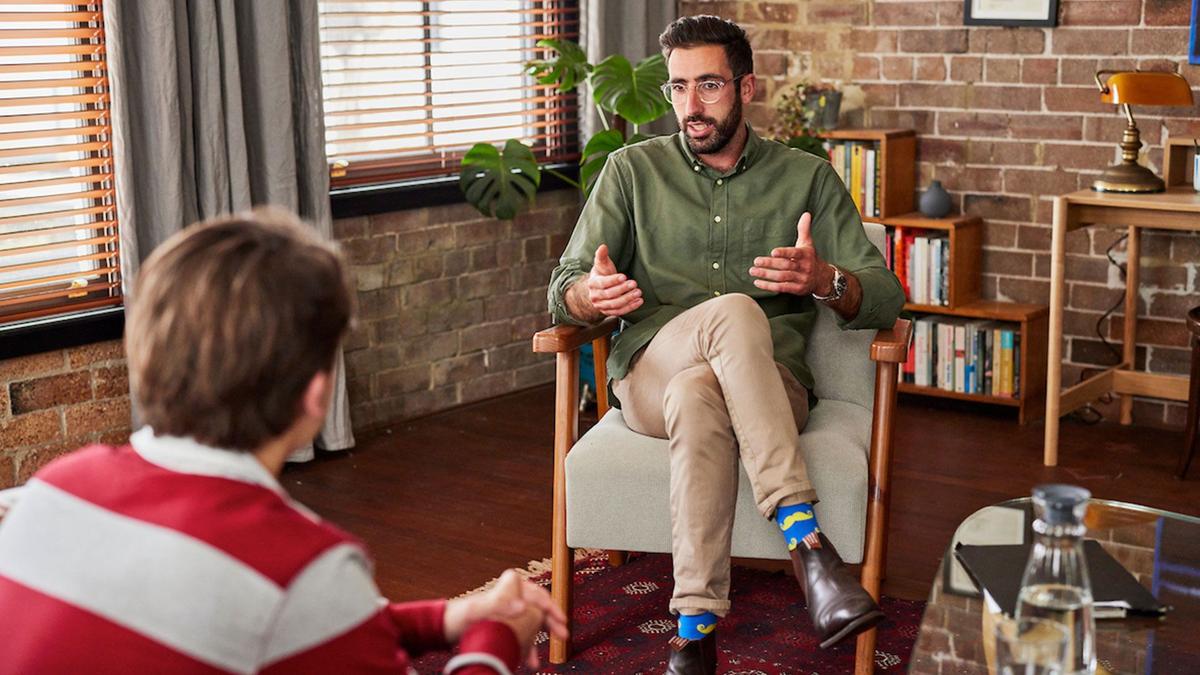
Dr Zac Seidler took men’s health to one of the country’s most influential stages, the National Press Club.
On one of the country's most influential stages, Dr Zac Seidler made the case for backing men, not blaming them.
Tell men what's possible, not just what's wrong with them.
Dr Zac Seidler, Global Director of Men’s Health Research at Movember, took that message to the National Press Club in Canberra today.
His case: we've spent too much time focusing on what's wrong with men, and not enough on what's possible for them, or on building the support they need to get there.
The National Press Club is one of Australia's most prestigious platforms.
Prime ministers, world leaders and changemakers have used it for decades to shape the national agenda.
Its addresses are broadcast live on television, so Zac's message was beamed to living rooms and newsrooms across the country.
For both Zac and Movember, there's no greater honour than seeing men's health take centre stage, with a real chance to change how Australia talks about men.
Backing men means building the systems around them, not telling them to toughen up.
Zac had three asks of the people who write the headlines, set the budgets, run the programs and make the laws:
- Bring a broader imagination. Tell the world what's possible for men, not just what's wrong with them.
- Build the scaffolding. Health services, schools, workplaces and platforms designed for the men we're asking them to become.
- Expect more of men. Shame stifles progress. Aspiration drives it. Give men something worth growing towards, and they'll rise to meet it.
In a single generation, what we ask of men has transformed. Present fathers. Emotionally fluent partners. Carers. Mates who check in. It's good for men and good for everyone around them.
"We've expanded the rules but the supports around men haven't kept up with this revolution," Zac said.
His fix has two parts: a blueprint for who men can be, and the scaffolding to help them get there.
The blueprint: tell men what's possible
Young men today have more rules and more freedom than ever, but less clarity than any generation before them. We tell them, loudly and often, what not to be. Not weak. Not violent. Not toxic. Not silent.
"We've offered almost nothing in its place. So, understandably, they go looking for someone who will," Zac said. "That's the gap the manosphere has seized: selling certainty in uncertain times."
He had a message for the journalists in the room, too. "When we keep pointing at what we want less of, we make it look like the norm," he said. Every story about the loudest, most rigid version of manhood is one fewer about the men quietly getting it right.
Masculinity isn't set in stone or written in our DNA, he said. It's made between us, at the dinner table, the pub and the office. And what's made between us can be remade.
A broader imagination for masculinity starts with what’s possible, not just what’s wrong.
The scaffolding: fix the system, not the man
Take dads for example. When Movember surveyed more than 1,200 Australian fathers for its More Than a Provider research, nearly three in four said they are more involved in their kids' day-to-day care than their own dads were.
Yet three in five new dads weren't asked about their mental health by a health professional during their partner’s pregnancy or in the first year after birth. This is despite global research across 16 countries showing that around 1 in 10 fathers experience perinatal depression during pregnancy and the first year after birth.
Advances in women's health and equality have shown what's possible when we fix the system instead of blaming the individual. Zac wants the same thinking for men. Australian men still die around four years earlier than women. Three in four Australians who die by suicide are men, and that's barely shifted in a generation.
"Men don't need to be told they're failing. Show them a system that's failing them, and they'll help fix it," he said.
Here's what that scaffolding looks like at Movember:
- Mental health checks for new dads. The NSW Government is investing $1 million for Movember to pilot checks that identify distress early and tell every new father he belongs in that room.
- Ahead of the Game. Movember's mental health program in football clubs across the country. It trains players, coaches, parents and volunteers, lifting the whole ecosystem around the young man.
- Men in Mind Pro. Movember's training course for primary care health professionals on how to better engage men in the healthcare system
"You don't build a house by telling the bricks to toughen up," Zac said.
Zac closed by talking about his ten-month-old son, Arty.
"When I hold him, I see endless possibility," he said. "Nobody looks at a baby boy and sees a risk waiting to happen or a problem to be managed."
Somewhere between the cot and the classroom, we lose that. It doesn't have to be that way. Healthy men make healthy families and healthy communities.
"Now just imagine that."
Movember is building the Healthy Manhood Index, a new way to measure what healthy looks like for men.
What is Movember doing about it?
To tell men what’s possible, we first need to know what healthy looks like. That’s why Movember is building the Healthy Manhood Index.
For decades, research has mostly looked at masculinity through the lens of risk: the more a man sticks to rigid norms, the worse his health. That work has produced vital findings, and it informs much of Movember’s own advocacy. But when Movember’s researchers reviewed 65 masculinity measures spanning 50 years of research, 78% focused on what men should move away from, not what they could move towards.
The Healthy Manhood Index aims to fill that gap. Rather than measuring the harms, it will measure what we want more of: things like whether men open-up to people they trust, seek care early, show up for their mates and families, and stay steady under pressure.
It’s a new way of understanding men’s health, and it’s being tested now.