Talking to your kids about the manosphere

What starts as a harmless scroll can quickly shift into something more extreme, often without a young man even noticing.
The algorithm is already telling your kid what it means to be a man. You don’t need to win the argument. You just need to stay in the conversation.
When Marc Fennell set out to investigate the manosphere for the ABC’s new documentary series, The State of Man, the story started at home. He discovered that online recommendations had led his young kids from Pokémon videos to manosphere content.
If that sounds familiar, you’re not alone, and you haven’t failed. That’s exactly how these feeds are built to work. Most parents don’t realise how quickly a feed can shift, or what to say when it does.
The good news? There’s something concrete you can do.
Talk to your kids early, often and without judgement. You won’t have all the answers, and you don’t need to. What matters is giving them the tools to question what they see, and the confidence to come to you when something doesn’t sit right.
Below, we break down what the manosphere is, how kids end up there, what to listen for, and ten practical ways to talk about it.
What even is the manosphere?
“Manosphere” has become a catch-all for the loudest, nastiest corners of young men’s online lives. In reality, it isn’t one thing, one ideology or one type of boy. It’s a broad collection of online communities, influencers and content creators who talk about men, masculinity, money, bodies, dating and relationships.
And it’s mainstream. Our global research with more than 3,000 young men aged 16–25 shows that nearly two thirds engage with this content, and that some of it is genuinely useful. From fitness tips to advice on building discipline, 43% of those watching say they find it motivating.
The trouble starts when the messaging hardens into something extreme, and often misogynistic. This content tends to:
- Blame women for men’s problems
- Portray women as inferior or less capable
- Frame relationships as a contest of power and control
- Treat emotions as weakness, and asking for help as failure
Being able to tell the difference matters. If we tell boys everything they’re watching is toxic, they stop listening, and fair enough, because they know it isn’t. A lecture shuts the door. An honest conversation about what’s helpful and what’s not keeps it open.
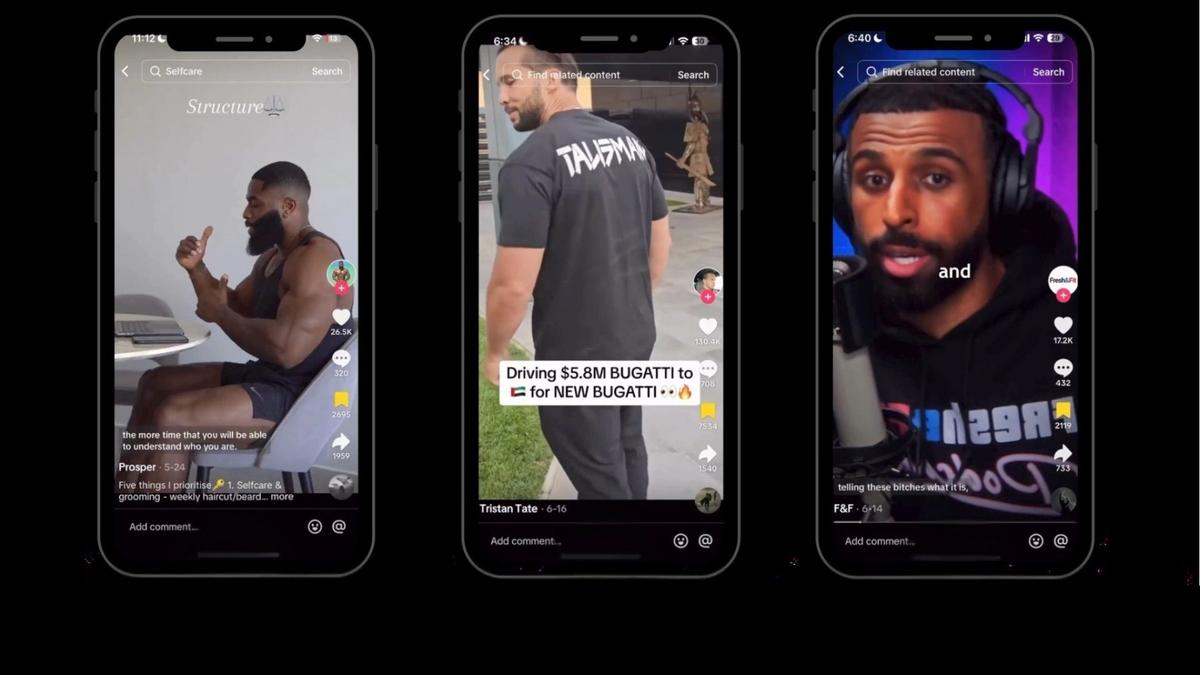
From fitness tips and gaming content to rigid “high-value man” rhetoric, the manosphere can show up in a single feed without a young man ever searching for it.
How do kids end up there?
Most boys and young men don’t go looking for the manosphere. The algorithm takes them there. When our researchers analysed the real TikTok viewing histories of 142 young men – more than 2,000 videos – almost half contained masculinity themes. Most of it (38%) was everyday stuff: gym, sport, fashion, gaming, dating tips. About 5% pushed a rigid ‘high-value man’ ideal built on dominance, money and emotional toughness, with women framed as rewards to be earned. Less than 1% was openly misogynistic, violent or promoted risks like steroids and peptides.
That might sound reassuring, until you see how it fits together. We describe it as an inverted iceberg: lifestyle content sits on the surface, with harder layers of dominance, contempt and risk underneath, all in the same feed and served up by the same algorithm. A young man can go from a tricep tutorial to a rant about being a ‘real man’ to something far darker in a single day. Because each step feels like more of the same, the shift is easy to miss. And 57% of young men say they don’t understand how platforms decide what to show them.
“Many young men engaging with this content are not looking for harm … But in algorithm-driven environments, they don’t just choose what they see – content is surfaced to them, and repeated exposure can start to make certain ideas feel normal, even when they’re not.”

Most boys and young men don’t go looking for the manosphere. The algorithm takes them there.
So why does it land? Too often we get transfixed on what an influencer said and forget to ask why a boy is listening. Young men aren’t looking for misogyny. Many are looking for direction, belonging and answers at a time when they’re trying to work out who they are. The manosphere didn’t invent those needs. It found them, and learned how to cash in on them.
Young men deserve a digital environment that supports their wellbeing, not one that profits from their insecurity.
Why it’s worth talking about
This isn’t just about attitudes. Young men who regularly watch masculinity influencers are more likely to report worse mental health, to put less priority on looking after it, and to take more risks, like using steroids or training through injury. More than a quarter (27%) say the content leaves them feeling worthless. We can’t say the content causes all of that – boys who are already struggling may be more drawn to it – but the link is too strong to shrug off. And it doesn’t stay on the screen. It shapes how boys see, and treat, the girls, women and people around them.
Despite all this, most parents hesitate to bring it up. Maybe it feels awkward, maybe you don’t know who these influencers are, or you’re worried about saying the wrong thing. Say something anyway. A clumsy conversation beats silence, and it beats leaving the job to the algorithm.
And the best part is you don’t need to get it perfect. Small, regular conversations beat one big talk every time.
What to listen for
No checklist can tell you whether your kid is consuming extremist content, and one throwaway comment isn’t cause for alarm. Boys have always pushed boundaries, and plenty can quote an influencer without buying what he’s selling. What you’re listening for is a pattern – the same ideas coming back, harder and more certain each time:
- Talk about what men are “owed” in relationships
- Blaming women for men’s frustrations
- Sexist jokes or memes, or seeing women as inferior or less capable
- Treating relationships as something to win or control
- Contempt for emotions or for asking for help
- Treating one influencer as having the answer to everything

Offline connection, whether it’s a shared hobby, a sport or simply time together, helps counter what the algorithm is selling.
Ten ways to talk to your kids about the manosphere
There’s no single script for having these conversations, but these ten principles will give you the best shot of cutting through the noise:
1. Start early and keep it casual.
Kids are running into this content younger than most parents think, so early, casual chats matter. Pick low-pressure moments, like a walk, a drive or a game together. Tone, body language and lack of judgement matter almost as much as your words.
2. Get curious before you correct.
Ask what they like about the creators they follow, and what they get out of it. Motivation? A laugh? Someone who seems to get them? The answer tells you what need you’re really dealing with. Try to understand the appeal before jumping in with your own view.
3. Ask questions that build critical thinking.
What problem does this person say they can solve? How does it make you feel afterwards? Who benefits if you believe it?
4. Show them what’s behind the screen.
For younger kids, keep it simple: apps are built to keep you watching, and some people make money from your attention. With teens, dig into how influencers earn through ads, subscriptions, courses and products, and how that shapes the messages they push.
5. Challenge the idea, not your kid.
The goal is to question the message, not make your kid feel bad for being drawn to it. “I see why that’s appealing, but I don’t think that’s fair to women” goes further than “you’re being sexist”.
6. Help them tell helpful from harmful.
Not everything in the manosphere is bad, and kids know it. Give them four questions to test anything they watch:
- Does it lift people up, or does it need others beneath it?
- Does it leave room for struggle?
- Is it about growth or grievance?
- What’s being sold?
7. Talk about what real strength looks like.
Real confidence doesn’t mean having power over someone else. It means treating people with respect and taking responsibility for your actions. Show them all feelings are okay: anger is fine, aggression isn’t, and asking for help is what strong people do.
8. Better belonging.
What pulls boys in is a need for belonging, so the answer isn’t just less screen time. It’s more connection offline. A team, a mentor, a group of mates or a shared hobby all count.
9. Hold your boundaries and keep the relationship strong.
You can tell him you love him and want him in your life, and still not accept being spoken to, or about others, with disrespect. As kids get older and need more independence, stay their safe harbour: someone to turn to for advice and emotional support.
10. Keep checking in.
One conversation isn’t enough. Send short, warm messages that don’t need a reply. Share meals, sport or practical help; side-by-side time is often easier than a big conversation. Keep it regular, keep it small, and let him know the door is always open.

Small, regular check-ins help keep the conversation about the manosphere open.
This not that
The instinct to shut it down is understandable, but these approaches tend to backfire.
| Instead of… | Try… |
|---|---|
| Banning or punishing without a conversation. Punishment alone tends to push this stuff underground. | Explaining your concerns and keeping the conversation going. |
| Shaming him. It only confirms the story he’s being sold: that adults and society are against him. | Showing you understand why it’s appealing. |
| Lumping it all together. If everything is “bad”, you lose your credibility on the parts that really are damaging. | Sorting what’s helpful from what’s harmful, together. |
| Debating the influencer. It puts your kid in the position of defending him and can push them closer. | Getting curious about what your kid gets from the content. |
| Lecturing first. If it sounds like a lecture, he’ll tune out before you get to the point. | Listening, then sharing your view. |
What happens if my son is already watching damaging content?
Don’t panic. Watching this content isn’t the same as believing it. Everything above still applies: get curious, challenge the idea and not your kid, keep the door open, and check in often.
If he seems low, withdrawn or hopeless, take it seriously. Our guide to talking to your kids about depression can help. A fixation on appearance, fasting or compulsive training can also be signs of disordered eating or muscle dysmorphia, which are often missed in boys. The Butterfly Foundation can support families dealing with these issues.
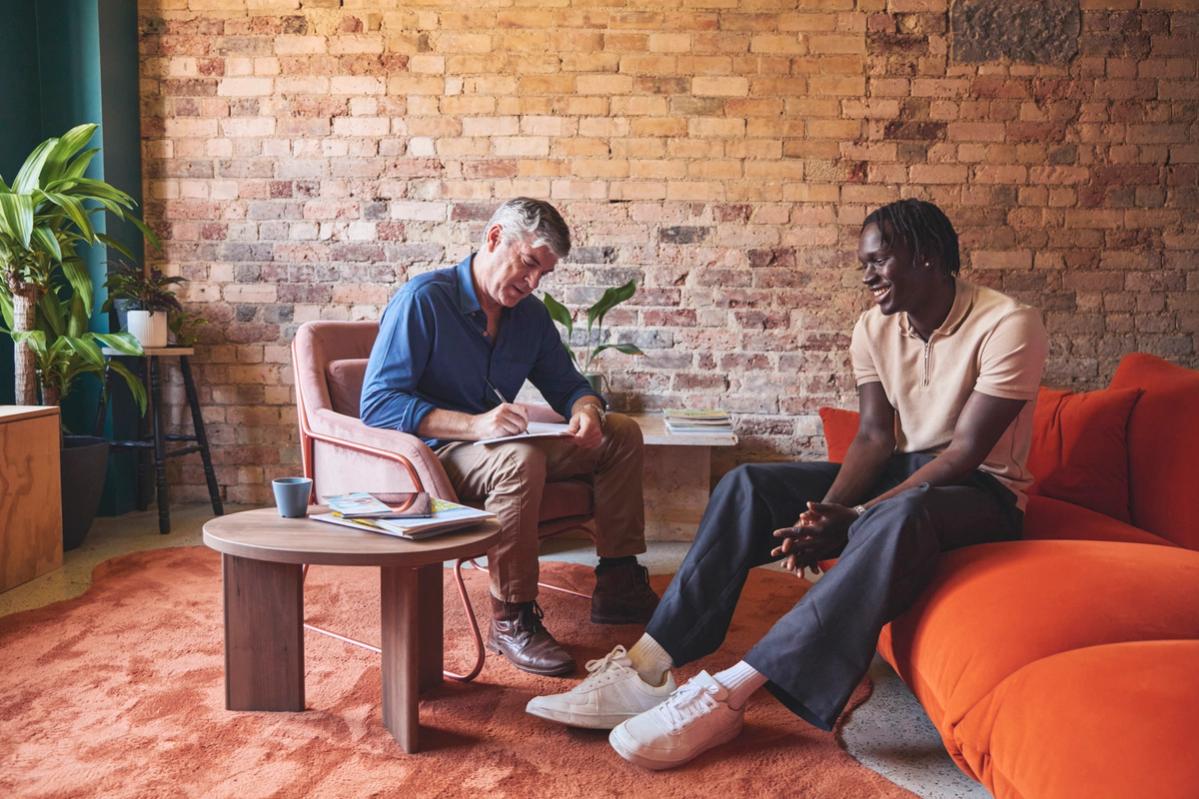
Men in Mind is a world-first training program helping healthcare professionals better understand and respond to the boys and men who come to them in distress.
What we’re doing about it
We’re working upstream, too. Through the Young Men & Media Collective, co-convened with Equimundo, we’re bringing together content creators, platforms and researchers to build healthier alternatives to what’s currently filling young men’s feeds. And our Masculinity Content Classification Framework gives platforms and policymakers a shared, evidence-based way to spot harmful content earlier, before boys reach the extreme end.
Men in Mind is a world-first online training program that helps healthcare professionals get the most out of every interaction with male patients.
It wasn’t built for the manosphere, but it’s part of the solution. By training mental health professionals and primary healthcare workers to better respond to boys and men in distress, we’re making sure the system is ready when they reach out.
The goal is simple: when a boy or young man takes that step to prioritize his health, he meets someone who gets it. No single program can counter the pull of the manosphere. But a health system that truly understands boys and men can give them something better to turn to.
Are you a health professional who works with men? Find out more about Men in Mind.
Immediate support
If you believe your child needs immediate support, don’t wait. Contact emergency services or a crisis line now.
Australia
- Lifeline: 13 11 14
- Kids Helpline: 1800 55 1800
- MensLine Australia: 1300 78 99 78
- Beyond Blue: 1300 22 46 36
- 1800RESPECT: 1800 737 732
- Emergency: 000